Legacy systems are obsolete software or technologies that were developed many years ago and are still in use, even if they are no longer updated by the manufacturer.
Okay, but why are we talking about this right now?
Because although they are widely used, many of these systems generally have outdated architectures, old programming languages, and processing methods that do not keep up with modern technological advances. The result at the moment of interaction is clear: user frustration.
How can I tell if my system falls into this “legacy system” category?
Well, it is not very simple, but we were able to identify some characteristics that are quite common in legacy systems:
Obsolete Technologies: They are based on outdated versions of software, hardware, or operating systems.
Lack of Support: Without regular updates or technical support, which makes them vulnerable to failures and incompatibilities.
Rigid Processes: They often present complex and inflexible processes that limit agility and innovation.
Did you get bingo? Well, there is a solution, but legacy systems generally face several barriers on the digital modernization journey. Do you identify with any of them?
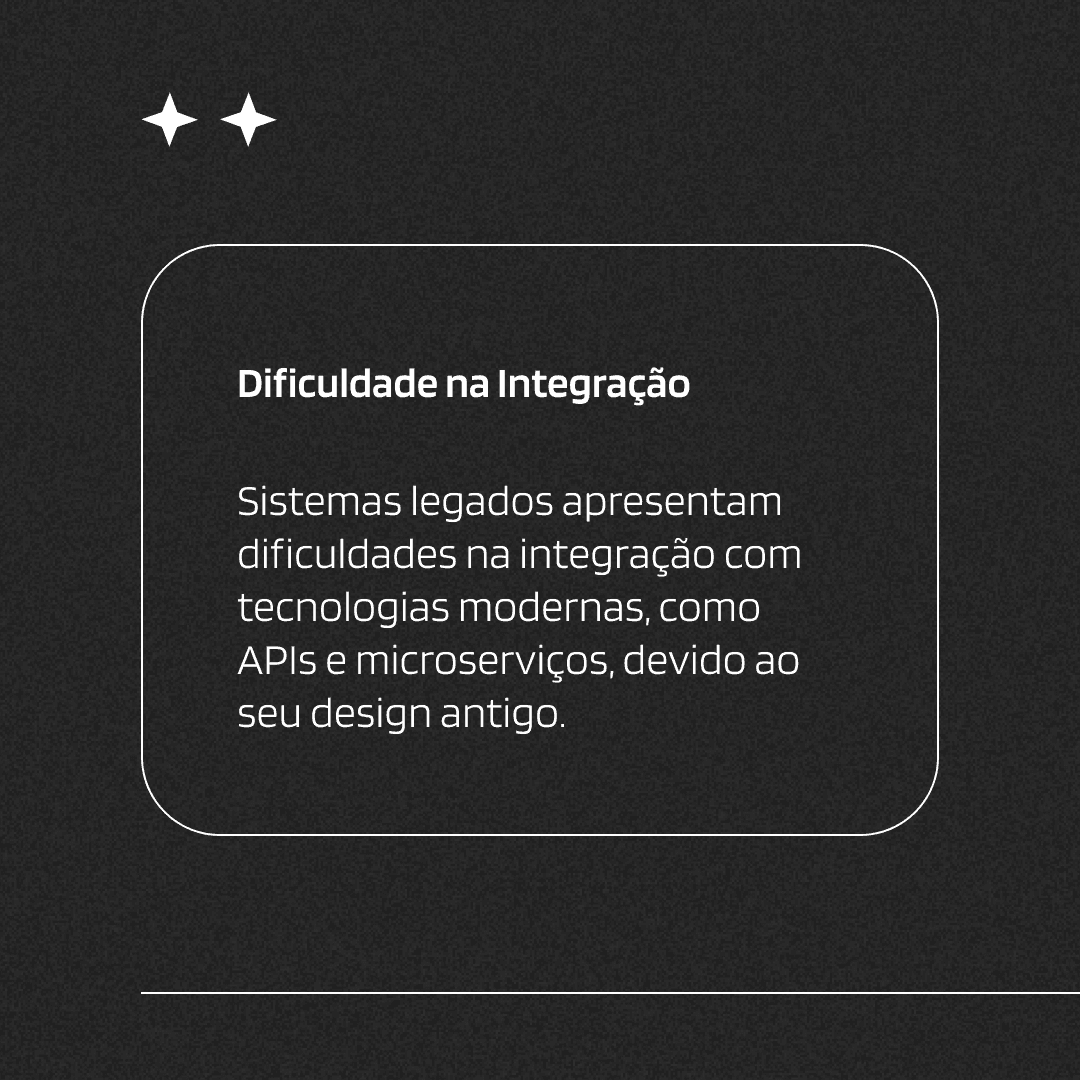
Integration Difficulty: Legacy systems were not designed to work with modern technologies, making integration with APIs and microservices a complex challenge.
Operational Inefficiencies: Over time, these systems accumulate outdated processes, directly affecting operational agility and decision-making.
Unsatisfactory Customer Experiences: Older technologies can limit personalization and innovation in the services offered, resulting in a disconnected and less attractive user experience.
Take it easy, there is a solution. To overcome these challenges, it is essential to implement a strategic approach to gradual modernization. Especially if many people are using your system. Here are some essential steps:
Conduct a Technology Audit
Start by identifying the critical components of the legacy system and analyzing its current capabilities. This will make it possible to understand which areas need immediate attention and which can be integrated with new solutions.
Integrate New Technologies with APIs and Microservices
Adopt a modular approach using APIs and microservices to create hybrid solutions. This will allow legacy technologies to coexist with modern innovations, promoting integration and greater efficiency.
Focus on Customer Experience
Seek solutions that improve the customer experience through more flexible and personalized technologies, promoting faster and more satisfying service.
Continuous Monitoring
Maintain a continuous monitoring strategy to adjust systems as needed, ensuring that the changes deliver sustainable results aligned with the company's goals.
Benefits of Digital Transformation
The gradual modernization of legacy systems brings significant benefits such as:
Greater Agility: More efficient operations with greater capacity to respond to market demands.
Improved Customer Experience: Offering personalized solutions and innovative services.
Sustainability: Updated systems reduce risks associated with technological failures and ensure business continuity.
Talk to us and see how the modernization of obsolete software and dedicated squads can increase efficiency and innovation in your operation.
LET'S TALK ABOUT YOUR PROJECT?
We help turn innovative ideas into reality, fix process flaws through digital solutions, and design interfaces that delight and engage. Committed to excellence and compliance with LGPD, we empower businesses to grow sustainably and securely.

ALL CASES
Challenges with Legacy Systems
•
5 min
Legacy systems are obsolete software or technologies that were developed many years ago and are still in use, even if they are no longer updated by the manufacturer.
Okay, but why are we talking about this right now?
Because although they are widely used, many of these systems generally have outdated architectures, old programming languages, and processing methods that do not keep up with modern technological advances. The result at the moment of interaction is clear: user frustration.
How can I tell if my system falls into this “legacy system” category?
Well, it is not very simple, but we were able to identify some characteristics that are quite common in legacy systems:
Obsolete Technologies: They are based on outdated versions of software, hardware, or operating systems.
Lack of Support: Without regular updates or technical support, which makes them vulnerable to failures and incompatibilities.
Rigid Processes: They often present complex and inflexible processes that limit agility and innovation.
Did you get bingo? Well, there is a solution, but legacy systems generally face several barriers on the digital modernization journey. Do you identify with any of them?
Integration Difficulty: Legacy systems were not designed to work with modern technologies, making integration with APIs and microservices a complex challenge.
Operational Inefficiencies: Over time, these systems accumulate outdated processes, directly affecting operational agility and decision-making.
Unsatisfactory Customer Experiences: Older technologies can limit personalization and innovation in the services offered, resulting in a disconnected and less attractive user experience.
Take it easy, there is a solution. To overcome these challenges, it is essential to implement a strategic approach to gradual modernization. Especially if many people are using your system. Here are some essential steps:
Conduct a Technology Audit
Start by identifying the critical components of the legacy system and analyzing its current capabilities. This will make it possible to understand which areas need immediate attention and which can be integrated with new solutions.
Integrate New Technologies with APIs and Microservices
Adopt a modular approach using APIs and microservices to create hybrid solutions. This will allow legacy technologies to coexist with modern innovations, promoting integration and greater efficiency.
Focus on Customer Experience
Seek solutions that improve the customer experience through more flexible and personalized technologies, promoting faster and more satisfying service.
Continuous Monitoring
Maintain a continuous monitoring strategy to adjust systems as needed, ensuring that the changes deliver sustainable results aligned with the company's goals.
Benefits of Digital Transformation
The gradual modernization of legacy systems brings significant benefits such as:
Greater Agility: More efficient operations with greater capacity to respond to market demands.
Improved Customer Experience: Offering personalized solutions and innovative services.
Sustainability: Updated systems reduce risks associated with technological failures and ensure business continuity.
Talk to us and see how the modernization of obsolete software and dedicated squads can increase efficiency and innovation in your operation.
LET'S TALK ABOUT YOUR PROJECT?
We help turn innovative ideas into reality, fix process flaws through digital solutions, and design interfaces that delight and engage. Committed to excellence and compliance with LGPD, we empower businesses to grow sustainably and securely.
ALL CASES
•
5 min
Challenges with Legacy Systems
Legacy systems are obsolete software or technologies that were developed many years ago and are still in use, even if they are no longer updated by the manufacturer.
Okay, but why are we talking about this right now?
Because although they are widely used, many of these systems generally have outdated architectures, old programming languages, and processing methods that do not keep up with modern technological advances. The result at the moment of interaction is clear: user frustration.
How can I tell if my system falls into this “legacy system” category?
Well, it is not very simple, but we were able to identify some characteristics that are quite common in legacy systems:
Obsolete Technologies: They are based on outdated versions of software, hardware, or operating systems.
Lack of Support: Without regular updates or technical support, which makes them vulnerable to failures and incompatibilities.
Rigid Processes: They often present complex and inflexible processes that limit agility and innovation.
Did you get bingo? Well, there is a solution, but legacy systems generally face several barriers on the digital modernization journey. Do you identify with any of them?
Integration Difficulty: Legacy systems were not designed to work with modern technologies, making integration with APIs and microservices a complex challenge.
Operational Inefficiencies: Over time, these systems accumulate outdated processes, directly affecting operational agility and decision-making.
Unsatisfactory Customer Experiences: Older technologies can limit personalization and innovation in the services offered, resulting in a disconnected and less attractive user experience.
Take it easy, there is a solution. To overcome these challenges, it is essential to implement a strategic approach to gradual modernization. Especially if many people are using your system. Here are some essential steps:
Conduct a Technology Audit
Start by identifying the critical components of the legacy system and analyzing its current capabilities. This will make it possible to understand which areas need immediate attention and which can be integrated with new solutions.
Integrate New Technologies with APIs and Microservices
Adopt a modular approach using APIs and microservices to create hybrid solutions. This will allow legacy technologies to coexist with modern innovations, promoting integration and greater efficiency.
Focus on Customer Experience
Seek solutions that improve the customer experience through more flexible and personalized technologies, promoting faster and more satisfying service.
Continuous Monitoring
Maintain a continuous monitoring strategy to adjust systems as needed, ensuring that the changes deliver sustainable results aligned with the company's goals.
Benefits of Digital Transformation
The gradual modernization of legacy systems brings significant benefits such as:
Greater Agility: More efficient operations with greater capacity to respond to market demands.
Improved Customer Experience: Offering personalized solutions and innovative services.
Sustainability: Updated systems reduce risks associated with technological failures and ensure business continuity.
Talk to us and see how the modernization of obsolete software and dedicated squads can increase efficiency and innovation in your operation.
LET'S TALK ABOUT YOUR PROJECT?
We help turn innovative ideas into reality, fix process flaws through digital solutions, and design interfaces that delight and engage. Committed to excellence and compliance with LGPD, we empower businesses to grow sustainably and securely.