
Mobile app development is the area of technology dedicated to creating software for mobile devices, such as smartphones and tablets. In recent years, this type of solution has become even more relevant as companies have started using apps to offer services, improve internal processes, and create new digital products.
The growth of this market is significant. Brazil, for example, is among the countries that consume the most apps in the world, with billions of downloads made every year. This scenario shows how apps have become part of people’s everyday lives and also a strategic opportunity for companies that want to innovate or expand their digital presence.
But after all, what does app development involve? What are the stages of this process? What technologies can be used, and how much does it cost to develop an app?
In this guide, you will understand everything from the basic concepts, such as what an app is, to the different types of apps, development methods, technologies used, and factors that influence a project’s cost.
What is an app
An app, or simply app, is software developed to perform specific functions on an electronic device, such as smartphones, tablets, or computers.
In practice, apps are created to make tasks easier or solve specific user problems. They can enable actions such as sending messages, making payments, accessing services, tracking information, or interacting with digital platforms.
The main characteristic of an app is direct interaction with the user. For this reason, apps usually offer intuitive graphical interfaces and experiences designed to make everyday use easier.
Today, there are apps for virtually any type of activity. Banking services, online shopping, urban mobility, education, entertainment, and communication are just a few examples of areas that use apps as their main access channel.
Another important point is that apps can work in different ways. Some depend entirely on an internet connection, while others offer features that can be used offline. In addition, there are free and paid apps, depending on the solution’s business model.
Although apps can be used on different devices, this article focuses on mobile app development, aimed mainly at smartphones and tablets.
What is the difference between an app and an application
Although the terms app and application are often used as synonyms, there is a small conceptual difference between them.
Application is a broader term used to refer to any software created to perform a specific function. Corporate systems, web platforms, and business tools can also be considered applications.
The term app, on the other hand, is usually used to describe software aimed directly at the end user, especially on mobile devices. Therefore, in everyday use, when we say app, we are usually referring to applications installed on smartphones or tablets.
Despite this distinction, both are part of the same software development universe.
What are the components of an app?
In app development, an app is not made up only of the interface the user sees. Behind each app there is a structure made up of different components that work together to ensure functionality, performance, and security.
The main components of an app include:
User Interface (UI)
The user interface is the visual part of the app. It includes elements such as screens, buttons, menus, icons, and interaction fields. The interface is responsible for presenting information and allowing the user to navigate and use the app’s features.
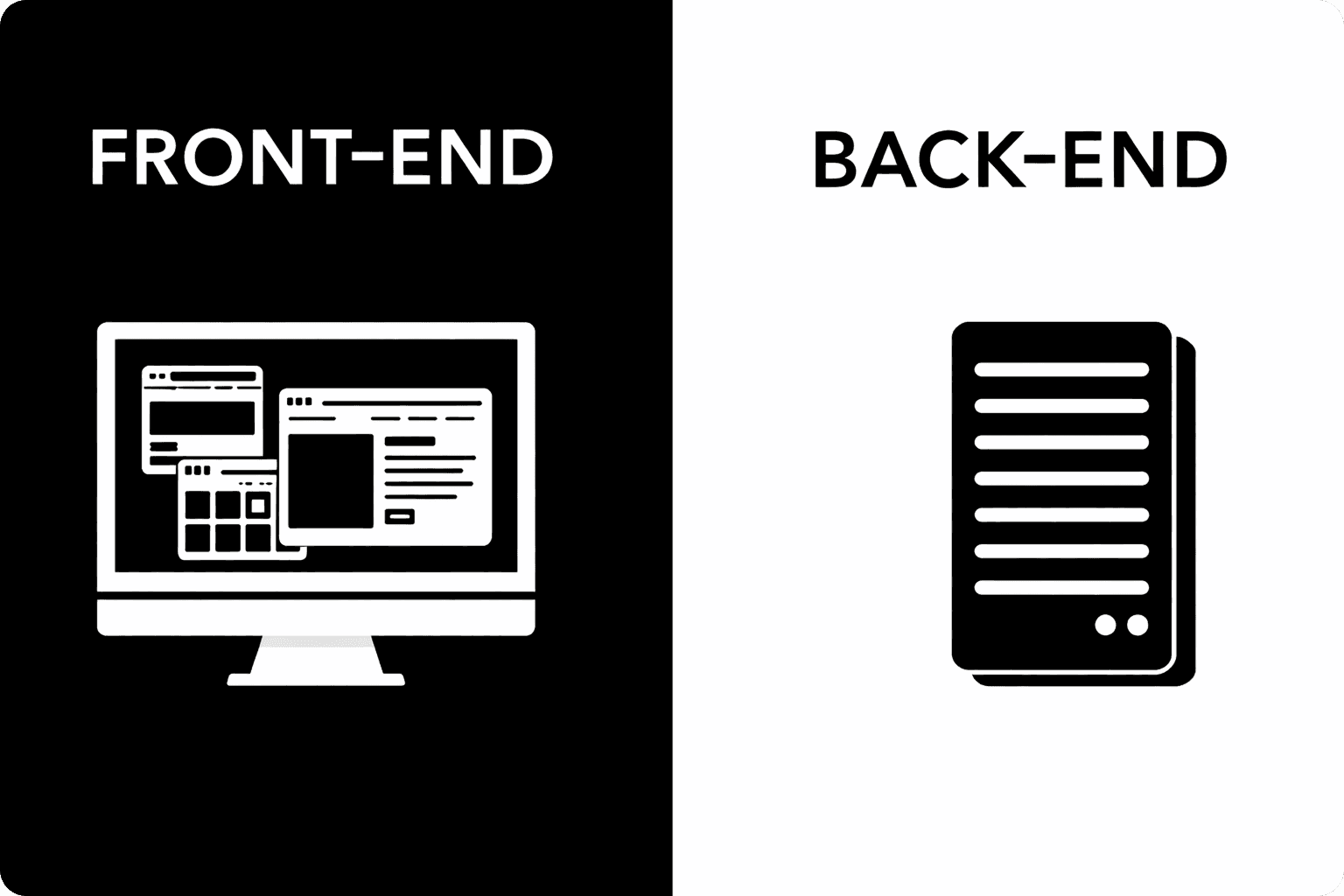
Front-end
The front-end is the layer responsible for implementing the app’s interface and enabling user interaction with the system. It controls screen behavior, animations, transitions, and responses to actions performed by the user.
Back-end
This refers to the part of the app that manages business logic, processes data, and communicates with servers and databases. It receives requests from the front-end and responds according to the system’s rules.
Database
The database is responsible for storing the information used by the app, such as user data, activity records, content, and settings.
APIs and integrations
APIs allow the app to connect to other systems and external services. They are used to integrate features such as payments, maps, user authentication, and notifications.
These components form the technical foundation of any app. In app development, they all need to work in an integrated way to ensure performance, stability, and the system’s ability to evolve.
Types of mobile apps
Native apps
Native apps are developed specifically for an operating system, such as Android or iOS. This means each platform has its own code and its own technologies.
This type of app offers better performance and greater integration with device resources such as the camera, GPS, sensors, and notifications.
Hybrid apps
Hybrid apps are developed using web technologies such as HTML, CSS, and JavaScript, but they run inside a mobile container that allows them to be installed on devices.
One of the advantages of this model is the ability to reuse much of the code across different platforms. However, depending on the app’s complexity, there may be limitations in performance or access to device resources.
Cross-platform apps
Cross-platform apps make it possible to create a single codebase that can be used to generate apps for different operating systems, such as Android and iOS.
Frameworks such as Flutter and React Native make this type of development possible, combining good performance with higher productivity in the app creation process.
Progressive Web Apps (PWA)
Progressive Web Apps are web applications that can work in a way similar to mobile apps. They are accessed through the browser, but can be installed on the device and offer features such as notifications and offline operation.
PWAs are often used when a simpler solution is desired, one that works across different devices without the need to be published in app stores.
App development: difference between mobile and web apps
In app development, it is important to understand the difference between mobile apps and web applications. Although both are digital solutions accessed by users, they have distinct characteristics and development approaches.
Mobile apps are created for mobile devices such as smartphones and tablets. They are developed for specific operating systems, mainly Android and iOS, and are usually distributed through app stores such as Google Play Store and Apple App Store.
Web apps, on the other hand, run directly in the browser. This means they do not need to be installed on the device and can be accessed on different platforms, such as computers, phones, tablets, and even smart TVs, as long as there is an internet connection.
In the app development process, each approach has its own particularities. Mobile apps can access device resources such as the camera, GPS, sensors, and notifications. Web applications, on the other hand, are usually more flexible in terms of access, since they work on any device with a browser.
In addition, the technologies used, design requirements, security strategies, and even the publishing process can vary between mobile and web apps.
That is why understanding the differences between these two approaches is an important step in choosing the best app development strategy for each project.
What is app development?
App development is the process of creating software designed to run on digital devices such as smartphones, tablets, and computers. This process involves several stages, from conceiving the idea to building, testing, publishing, and continuously evolving the app.
In app development, different areas work together to turn a need or business opportunity into a functional digital solution. This includes activities such as requirements definition, interface design, programming, systems integration, quality testing, and software maintenance.
Beyond the technical side, app development also involves strategic decisions related to the target audience, the product’s features, the technologies used, and the way the app will be distributed and maintained over time.
With the growth in the use of smartphones and digital services, app development has become an important part of companies’ digital transformation and the creation of new digital products.
How does app development work?
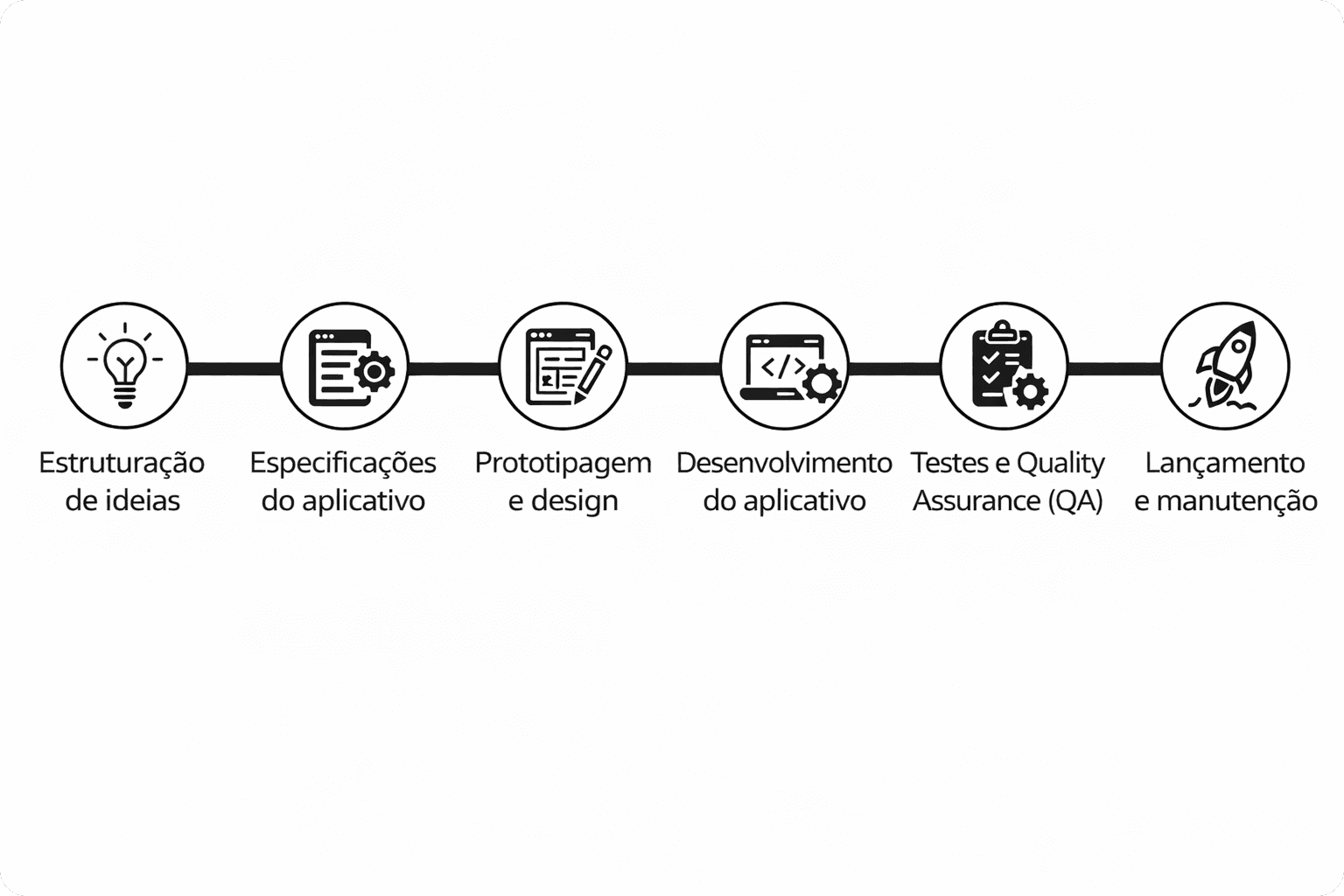
App development follows a structured process that turns an idea into a functional digital product. This process involves different stages that help organize the project, align expectations among teams, and ensure that the app meets the needs of the business and its users.
Although each project has its own particularities, app development generally goes through some fundamental phases.
1. Requirements definition
The first step in app development is to clearly understand what the product needs to do. At this stage, the app’s features, the project’s goals, and the problems the solution intends to solve are identified.
Important technical aspects are also defined, such as expected performance, security, integration with other systems, and data management. This information helps create a solid foundation for development.
2. Feasibility assessment
After defining the requirements, it is important to analyze whether the project is viable from a technical, financial, and operational standpoint.
This assessment considers factors such as the technologies required, development timeline, associated costs, and possible legal or infrastructure constraints. The goal is to ensure that the app can be developed within the available conditions.
3. Experience and interface design
With the project foundations defined, the design stage begins. At this point, the first visual representations of the app, such as wireframes and prototypes, are created.
In addition to the visual interface, the focus is also on the user experience. The goal is to ensure that the app is intuitive, easy to navigate, and suited to the needs of the audience that will use it.
These prototypes make it possible to visualize how the app will work before programming, making adjustments and validations easier.
4. App development
The development stage is when the app starts to be built technically. Developers work on implementing the features, creating both the visual part of the app and its functional logic.
Depending on the project, this phase may involve front-end development, back-end development, API integrations, and the database structure needed for the system to function.
5. Testing and validation
Before it is launched, the app needs to go through a series of tests. This phase aims to identify errors, malfunctions, and possible performance issues.
Testing helps ensure that the app works correctly on different devices, operating systems, and usage scenarios.
6. App publication
After the app has been tested and validated, it can be made available to users. In the case of mobile apps, this usually involves publishing them in app stores such as Google Play Store or Apple App Store.
This stage also includes configuring the production environment and initial monitoring of the app’s operation.
7. Continuous evolution
App development does not end with the launch. After publication, the app continues to evolve based on real usage, user feedback, and business needs.
Updates, performance improvements, bug fixes, and new features are part of the lifecycle of any digital app.
What work methods are used in app development?
In app development, different work methods can be used to organize the software creation process. These methods help teams plan tasks, track project progress, and deliver features in a structured way.
Among the most widely used approaches in app development are:
Agile methodologies
Agile methodologies are widely adopted in app development because they allow work to be done iteratively and incrementally. Instead of developing the entire app at once, the work is divided into smaller cycles, enabling frequent adjustments and continuous improvements based on user feedback.
Scrum
Scrum is one of the most popular agile frameworks in software development. It organizes work into cycles called sprints, which usually last between two and four weeks.
During each sprint, the team develops a set of previously prioritized features. At the end of the cycle, the results are evaluated and new priorities are defined for the next project stages.
Kanban
Kanban is a visual task management method. It uses boards that show the workflow, making it possible to track progress from planning to completion.
This model helps teams identify bottlenecks, better organize demands, and maintain a continuous development flow.
Lean Software Development
Lean Software Development is an approach inspired by Lean Manufacturing principles, focused on eliminating waste and maximizing value for the user.
In app development, this methodology seeks to simplify processes, reduce unnecessary activities, and deliver solutions more quickly and efficiently.
Extreme Programming (XP)
Extreme Programming, or XP, is an agile methodology aimed at improving software quality and increasing responsiveness to change.
Its practices include test-driven development (TDD), pair programming, continuous integration, and frequent delivery of small improvements to the system.
DevOps
DevOps is an approach that integrates development and infrastructure operations, with the goal of making the software delivery process faster and more reliable.
In app development, DevOps practices help automate testing, integrations, and deployments, allowing new versions of the app to be released more safely and more often.
Who works in app development?
App development involves a multidisciplinary team made up of professionals with different specialties. Each role contributes to a specific part of the process, from product definition to technical construction and app evolution.
The main professionals involved in app development include:
Product Manager or Product Owner
The Product Manager or Product Owner is responsible for defining the product vision and ensuring that the app meets the needs of the business and its users. This professional organizes priorities, defines features, and tracks development progress.
UX/UI Designer
The UX (User Experience) and UI (User Interface) designer is responsible for designing the app’s experience and interface. This professional creates wireframes and prototypes and defines how users will interact with the app. The goal is to ensure that the app is intuitive, easy to use, and visually consistent.
Mobile Developer
The mobile developer is responsible for programming the app. This professional implements features, builds the app’s screens, and ensures it works correctly on mobile devices.
Depending on the technology used, there may be professionals specializing in Android, iOS, or cross-platform development.
Back-end Developer
The back-end developer works on the part of the system that resides on servers. They are responsible for creating the system logic, managing data, building APIs, and integrating the app with other services. This layer is essential to ensure that the app works securely and efficiently.
QA (Quality Assurance)
The Quality Assurance team is responsible for testing the app and ensuring its quality. These professionals check whether the features work correctly, identify errors, and help prevent problems before the app is launched.
DevOps or infrastructure engineering
DevOps professionals take care of the infrastructure needed for the app to run in production. They configure servers, automate integration and deployment processes, and monitor system performance. This role is important to ensure the app’s stability, security, and scalability.
Main languages used in app development
Choosing the right programming language is one of the important decisions in app development. The choice depends on factors such as the target platform, the type of app, and the development approach adopted, which can be native or cross-platform.
Each language has specific characteristics that influence performance, ease of maintenance, and integration with device resources.
The main languages used in app development include:
Language | Main characteristics |
Kotlin (Android) | One of the most widely used languages in Android app development. Modern and concise, it reduces the amount of code compared to Java and has strong integration with the Android ecosystem. |
Swift (iOS) | A language created by Apple for iOS app development. It stands out for performance, security, and clear syntax, and is widely used to create apps for iPhone and iPad. |
C++ (Android and iOS) | Widely used in applications that demand high performance, such as games or solutions with intensive processing. It offers greater control over memory and system resources. |
Dart (Android and iOS) | Language used in the Flutter framework for cross-platform development. It makes it possible to create apps for different operating systems from a single codebase. |
The choice of language depends on the project strategy and the platforms the app needs to support. In general, Kotlin is widely used in Android development, Swift dominates the iOS ecosystem, and Dart stands out in cross-platform projects with Flutter.
How long does it take to develop an app?
The time required for app development can vary greatly depending on the project’s characteristics. Simple apps can be developed in a few months, while more complex solutions may take a significantly longer period before launch.
Several factors influence this timeline, from the app’s scope to the structure of the team responsible for development.
The main factors that affect development time include:
Number and complexity of features
The greater the number of features and the more complex the app’s business rules are, the more time is usually needed to develop, test, and validate the product.
Team size
The number of professionals involved in the project also influences the pace of development. However, increasing the team does not always mean speeding up the process. Very large teams can create communication and organization challenges, which can affect productivity.
Team experience
More experienced professionals are generally able to solve problems more quickly and make more accurate technical decisions. This can help reduce rework and improve the efficiency of the development process.
Project organization
Well-planned projects, with clear requirements and defined processes, tend to progress more predictably. Good product and development management helps avoid delays and unnecessary adjustments throughout the project.
In general, when the project is well structured, it is common for an initial version of the app — known as a MVP (Minimum Viable Product) — to be developed in an approximate period of two to three months.
How much does it cost to develop an app?
The cost of app development can also vary widely, depending on the project’s complexity, the number of features, and the technologies used.
Smaller projects, with simpler features and few integrations, tend to require lower investment. More complex apps, on the other hand, which involve multiple features, integrations with other systems, and robust infrastructure, may require a significantly larger investment.
In general, costs can vary across different investment ranges:
Simple apps: generally involve basic features and few integrations.
Medium-sized apps: include more features, greater design customization, and integration with other systems.
Complex apps: have a large volume of features, advanced business rules, and infrastructure prepared to support many users.
Large-scale apps, such as mobility, streaming, or financial service platforms, require more robust architectures and larger development teams, which significantly increases the required investment.
Factors that impact an app’s cost
The final cost of app development depends on several technical and strategic factors. The main ones include:
Scope and number of app features
Platforms on which the app will be available (Android, iOS, web, or multiple platforms)
Complexity of integrations with other systems or APIs
Level of customization of the design and user experience
Security and compliance requirements
Desired project delivery timeline
Therefore, before starting app development, it is important to clearly define the product’s objectives, the scope of the features, and the resources needed to build the solution. This allows for more realistic estimates and more efficient project planning.
How to create an app?
Creating an app involves a series of strategic and technical decisions. In app development, there are different paths that can be taken depending on the company’s goals, the desired level of customization, the available budget, and the project delivery timeline.
In general, there are three main approaches to creating an app.
Use a ready-made app (SaaS)
One alternative is to use an existing software product in the Software as a Service (SaaS) model. In this format, the app is provided by a vendor and accessed via the internet by subscription.
This approach is usually faster to implement and requires less initial investment, since there is no need to develop the app from scratch.
On the other hand, customization may be limited because the solution was designed to serve different clients. In addition, the company becomes dependent on the vendor for updates, improvements, or fixes, and the software does not belong to the business.
Develop with an in-house team
Another option is to build an internal team responsible for app development. In this model, the company hires specialized professionals to plan, develop, and maintain the system.
This approach allows greater control over the product and stronger alignment with the company’s strategy. The team can also closely monitor the app’s evolution and make continuous improvements.
However, this option requires investment in hiring, team management, and technology infrastructure, as well as more time to structure the team.
Develop with a software house
It is also possible to hire a company specialized in app development, known as a software house. In this case, app development is carried out by an external team with experience in software projects.
This alternative gives you access to specialized professionals and well-established development methodologies. In addition, it can be a faster way to start the project without needing to build a complete internal team.
On the other hand, it is important to ensure good communication between the hiring company and the team responsible for development.

How to choose an app development company
If the option is to hire a specialized company, choosing the right partner is essential for the success of the project.
Some factors can help with this decision:
Portfolio and experience
Evaluating the company’s previous projects helps you understand whether it has experience with apps similar to the one you want to develop.
Technical specialization
Check whether the company masters the technologies needed for the project, such as development for Android, iOS, or cross-platform frameworks.
Market reputation
Looking for reviews, client testimonials, and references can help identify the company’s reliability.
Communication during the project
Clear and frequent communication is essential to align expectations and follow the development progress.
Support and maintenance
After the app is launched, it is important to ensure there is support for fixes, updates, and continuous improvements.
By considering these factors, the company increases its chances of choosing a development partner aligned with the project’s goals and capable of delivering a quality digital solution.
How UEEK can help with your app development
If your company is considering developing an app, we can help structure this process and turn your idea into a consistent digital product ready for real use. Get in touch with us to talk about developing your app.

LET'S TALK ABOUT YOUR PROJECT?
We help turn innovative ideas into reality, fix process flaws through digital solutions, and design interfaces that delight and engage. Committed to excellence and compliance with LGPD, we empower businesses to grow sustainably and securely.

ALL CASES
App development: structure, steps, and everything you need to know
•
15 min
Mobile app development is the area of technology dedicated to creating software for mobile devices, such as smartphones and tablets. In recent years, this type of solution has become even more relevant as companies have started using apps to offer services, improve internal processes, and create new digital products.
The growth of this market is significant. Brazil, for example, is among the countries that consume the most apps in the world, with billions of downloads made every year. This scenario shows how apps have become part of people’s everyday lives and also a strategic opportunity for companies that want to innovate or expand their digital presence.
But after all, what does app development involve? What are the stages of this process? What technologies can be used, and how much does it cost to develop an app?
In this guide, you will understand everything from the basic concepts, such as what an app is, to the different types of apps, development methods, technologies used, and factors that influence a project’s cost.
What is an app
An app, or simply app, is software developed to perform specific functions on an electronic device, such as smartphones, tablets, or computers.
In practice, apps are created to make tasks easier or solve specific user problems. They can enable actions such as sending messages, making payments, accessing services, tracking information, or interacting with digital platforms.
The main characteristic of an app is direct interaction with the user. For this reason, apps usually offer intuitive graphical interfaces and experiences designed to make everyday use easier.
Today, there are apps for virtually any type of activity. Banking services, online shopping, urban mobility, education, entertainment, and communication are just a few examples of areas that use apps as their main access channel.
Another important point is that apps can work in different ways. Some depend entirely on an internet connection, while others offer features that can be used offline. In addition, there are free and paid apps, depending on the solution’s business model.
Although apps can be used on different devices, this article focuses on mobile app development, aimed mainly at smartphones and tablets.
What is the difference between an app and an application
Although the terms app and application are often used as synonyms, there is a small conceptual difference between them.
Application is a broader term used to refer to any software created to perform a specific function. Corporate systems, web platforms, and business tools can also be considered applications.
The term app, on the other hand, is usually used to describe software aimed directly at the end user, especially on mobile devices. Therefore, in everyday use, when we say app, we are usually referring to applications installed on smartphones or tablets.
Despite this distinction, both are part of the same software development universe.
What are the components of an app?
In app development, an app is not made up only of the interface the user sees. Behind each app there is a structure made up of different components that work together to ensure functionality, performance, and security.
The main components of an app include:
User Interface (UI)
The user interface is the visual part of the app. It includes elements such as screens, buttons, menus, icons, and interaction fields. The interface is responsible for presenting information and allowing the user to navigate and use the app’s features.
Front-end
The front-end is the layer responsible for implementing the app’s interface and enabling user interaction with the system. It controls screen behavior, animations, transitions, and responses to actions performed by the user.
Back-end
This refers to the part of the app that manages business logic, processes data, and communicates with servers and databases. It receives requests from the front-end and responds according to the system’s rules.
Database
The database is responsible for storing the information used by the app, such as user data, activity records, content, and settings.
APIs and integrations
APIs allow the app to connect to other systems and external services. They are used to integrate features such as payments, maps, user authentication, and notifications.
These components form the technical foundation of any app. In app development, they all need to work in an integrated way to ensure performance, stability, and the system’s ability to evolve.
Types of mobile apps
Native apps
Native apps are developed specifically for an operating system, such as Android or iOS. This means each platform has its own code and its own technologies.
This type of app offers better performance and greater integration with device resources such as the camera, GPS, sensors, and notifications.
Hybrid apps
Hybrid apps are developed using web technologies such as HTML, CSS, and JavaScript, but they run inside a mobile container that allows them to be installed on devices.
One of the advantages of this model is the ability to reuse much of the code across different platforms. However, depending on the app’s complexity, there may be limitations in performance or access to device resources.
Cross-platform apps
Cross-platform apps make it possible to create a single codebase that can be used to generate apps for different operating systems, such as Android and iOS.
Frameworks such as Flutter and React Native make this type of development possible, combining good performance with higher productivity in the app creation process.
Progressive Web Apps (PWA)
Progressive Web Apps are web applications that can work in a way similar to mobile apps. They are accessed through the browser, but can be installed on the device and offer features such as notifications and offline operation.
PWAs are often used when a simpler solution is desired, one that works across different devices without the need to be published in app stores.
App development: difference between mobile and web apps
In app development, it is important to understand the difference between mobile apps and web applications. Although both are digital solutions accessed by users, they have distinct characteristics and development approaches.
Mobile apps are created for mobile devices such as smartphones and tablets. They are developed for specific operating systems, mainly Android and iOS, and are usually distributed through app stores such as Google Play Store and Apple App Store.
Web apps, on the other hand, run directly in the browser. This means they do not need to be installed on the device and can be accessed on different platforms, such as computers, phones, tablets, and even smart TVs, as long as there is an internet connection.
In the app development process, each approach has its own particularities. Mobile apps can access device resources such as the camera, GPS, sensors, and notifications. Web applications, on the other hand, are usually more flexible in terms of access, since they work on any device with a browser.
In addition, the technologies used, design requirements, security strategies, and even the publishing process can vary between mobile and web apps.
That is why understanding the differences between these two approaches is an important step in choosing the best app development strategy for each project.
What is app development?
App development is the process of creating software designed to run on digital devices such as smartphones, tablets, and computers. This process involves several stages, from conceiving the idea to building, testing, publishing, and continuously evolving the app.
In app development, different areas work together to turn a need or business opportunity into a functional digital solution. This includes activities such as requirements definition, interface design, programming, systems integration, quality testing, and software maintenance.
Beyond the technical side, app development also involves strategic decisions related to the target audience, the product’s features, the technologies used, and the way the app will be distributed and maintained over time.
With the growth in the use of smartphones and digital services, app development has become an important part of companies’ digital transformation and the creation of new digital products.
How does app development work?
App development follows a structured process that turns an idea into a functional digital product. This process involves different stages that help organize the project, align expectations among teams, and ensure that the app meets the needs of the business and its users.
Although each project has its own particularities, app development generally goes through some fundamental phases.
1. Requirements definition
The first step in app development is to clearly understand what the product needs to do. At this stage, the app’s features, the project’s goals, and the problems the solution intends to solve are identified.
Important technical aspects are also defined, such as expected performance, security, integration with other systems, and data management. This information helps create a solid foundation for development.
2. Feasibility assessment
After defining the requirements, it is important to analyze whether the project is viable from a technical, financial, and operational standpoint.
This assessment considers factors such as the technologies required, development timeline, associated costs, and possible legal or infrastructure constraints. The goal is to ensure that the app can be developed within the available conditions.
3. Experience and interface design
With the project foundations defined, the design stage begins. At this point, the first visual representations of the app, such as wireframes and prototypes, are created.
In addition to the visual interface, the focus is also on the user experience. The goal is to ensure that the app is intuitive, easy to navigate, and suited to the needs of the audience that will use it.
These prototypes make it possible to visualize how the app will work before programming, making adjustments and validations easier.
4. App development
The development stage is when the app starts to be built technically. Developers work on implementing the features, creating both the visual part of the app and its functional logic.
Depending on the project, this phase may involve front-end development, back-end development, API integrations, and the database structure needed for the system to function.
5. Testing and validation
Before it is launched, the app needs to go through a series of tests. This phase aims to identify errors, malfunctions, and possible performance issues.
Testing helps ensure that the app works correctly on different devices, operating systems, and usage scenarios.
6. App publication
After the app has been tested and validated, it can be made available to users. In the case of mobile apps, this usually involves publishing them in app stores such as Google Play Store or Apple App Store.
This stage also includes configuring the production environment and initial monitoring of the app’s operation.
7. Continuous evolution
App development does not end with the launch. After publication, the app continues to evolve based on real usage, user feedback, and business needs.
Updates, performance improvements, bug fixes, and new features are part of the lifecycle of any digital app.
What work methods are used in app development?
In app development, different work methods can be used to organize the software creation process. These methods help teams plan tasks, track project progress, and deliver features in a structured way.
Among the most widely used approaches in app development are:
Agile methodologies
Agile methodologies are widely adopted in app development because they allow work to be done iteratively and incrementally. Instead of developing the entire app at once, the work is divided into smaller cycles, enabling frequent adjustments and continuous improvements based on user feedback.
Scrum
Scrum is one of the most popular agile frameworks in software development. It organizes work into cycles called sprints, which usually last between two and four weeks.
During each sprint, the team develops a set of previously prioritized features. At the end of the cycle, the results are evaluated and new priorities are defined for the next project stages.
Kanban
Kanban is a visual task management method. It uses boards that show the workflow, making it possible to track progress from planning to completion.
This model helps teams identify bottlenecks, better organize demands, and maintain a continuous development flow.
Lean Software Development
Lean Software Development is an approach inspired by Lean Manufacturing principles, focused on eliminating waste and maximizing value for the user.
In app development, this methodology seeks to simplify processes, reduce unnecessary activities, and deliver solutions more quickly and efficiently.
Extreme Programming (XP)
Extreme Programming, or XP, is an agile methodology aimed at improving software quality and increasing responsiveness to change.
Its practices include test-driven development (TDD), pair programming, continuous integration, and frequent delivery of small improvements to the system.
DevOps
DevOps is an approach that integrates development and infrastructure operations, with the goal of making the software delivery process faster and more reliable.
In app development, DevOps practices help automate testing, integrations, and deployments, allowing new versions of the app to be released more safely and more often.
Who works in app development?
App development involves a multidisciplinary team made up of professionals with different specialties. Each role contributes to a specific part of the process, from product definition to technical construction and app evolution.
The main professionals involved in app development include:
Product Manager or Product Owner
The Product Manager or Product Owner is responsible for defining the product vision and ensuring that the app meets the needs of the business and its users. This professional organizes priorities, defines features, and tracks development progress.
UX/UI Designer
The UX (User Experience) and UI (User Interface) designer is responsible for designing the app’s experience and interface. This professional creates wireframes and prototypes and defines how users will interact with the app. The goal is to ensure that the app is intuitive, easy to use, and visually consistent.
Mobile Developer
The mobile developer is responsible for programming the app. This professional implements features, builds the app’s screens, and ensures it works correctly on mobile devices.
Depending on the technology used, there may be professionals specializing in Android, iOS, or cross-platform development.
Back-end Developer
The back-end developer works on the part of the system that resides on servers. They are responsible for creating the system logic, managing data, building APIs, and integrating the app with other services. This layer is essential to ensure that the app works securely and efficiently.
QA (Quality Assurance)
The Quality Assurance team is responsible for testing the app and ensuring its quality. These professionals check whether the features work correctly, identify errors, and help prevent problems before the app is launched.
DevOps or infrastructure engineering
DevOps professionals take care of the infrastructure needed for the app to run in production. They configure servers, automate integration and deployment processes, and monitor system performance. This role is important to ensure the app’s stability, security, and scalability.
Main languages used in app development
Choosing the right programming language is one of the important decisions in app development. The choice depends on factors such as the target platform, the type of app, and the development approach adopted, which can be native or cross-platform.
Each language has specific characteristics that influence performance, ease of maintenance, and integration with device resources.
The main languages used in app development include:
Language | Main characteristics |
Kotlin (Android) | One of the most widely used languages in Android app development. Modern and concise, it reduces the amount of code compared to Java and has strong integration with the Android ecosystem. |
Swift (iOS) | A language created by Apple for iOS app development. It stands out for performance, security, and clear syntax, and is widely used to create apps for iPhone and iPad. |
C++ (Android and iOS) | Widely used in applications that demand high performance, such as games or solutions with intensive processing. It offers greater control over memory and system resources. |
Dart (Android and iOS) | Language used in the Flutter framework for cross-platform development. It makes it possible to create apps for different operating systems from a single codebase. |
The choice of language depends on the project strategy and the platforms the app needs to support. In general, Kotlin is widely used in Android development, Swift dominates the iOS ecosystem, and Dart stands out in cross-platform projects with Flutter.
How long does it take to develop an app?
The time required for app development can vary greatly depending on the project’s characteristics. Simple apps can be developed in a few months, while more complex solutions may take a significantly longer period before launch.
Several factors influence this timeline, from the app’s scope to the structure of the team responsible for development.
The main factors that affect development time include:
Number and complexity of features
The greater the number of features and the more complex the app’s business rules are, the more time is usually needed to develop, test, and validate the product.
Team size
The number of professionals involved in the project also influences the pace of development. However, increasing the team does not always mean speeding up the process. Very large teams can create communication and organization challenges, which can affect productivity.
Team experience
More experienced professionals are generally able to solve problems more quickly and make more accurate technical decisions. This can help reduce rework and improve the efficiency of the development process.
Project organization
Well-planned projects, with clear requirements and defined processes, tend to progress more predictably. Good product and development management helps avoid delays and unnecessary adjustments throughout the project.
In general, when the project is well structured, it is common for an initial version of the app — known as a MVP (Minimum Viable Product) — to be developed in an approximate period of two to three months.
How much does it cost to develop an app?
The cost of app development can also vary widely, depending on the project’s complexity, the number of features, and the technologies used.
Smaller projects, with simpler features and few integrations, tend to require lower investment. More complex apps, on the other hand, which involve multiple features, integrations with other systems, and robust infrastructure, may require a significantly larger investment.
In general, costs can vary across different investment ranges:
Simple apps: generally involve basic features and few integrations.
Medium-sized apps: include more features, greater design customization, and integration with other systems.
Complex apps: have a large volume of features, advanced business rules, and infrastructure prepared to support many users.
Large-scale apps, such as mobility, streaming, or financial service platforms, require more robust architectures and larger development teams, which significantly increases the required investment.
Factors that impact an app’s cost
The final cost of app development depends on several technical and strategic factors. The main ones include:
Scope and number of app features
Platforms on which the app will be available (Android, iOS, web, or multiple platforms)
Complexity of integrations with other systems or APIs
Level of customization of the design and user experience
Security and compliance requirements
Desired project delivery timeline
Therefore, before starting app development, it is important to clearly define the product’s objectives, the scope of the features, and the resources needed to build the solution. This allows for more realistic estimates and more efficient project planning.
How to create an app?
Creating an app involves a series of strategic and technical decisions. In app development, there are different paths that can be taken depending on the company’s goals, the desired level of customization, the available budget, and the project delivery timeline.
In general, there are three main approaches to creating an app.
Use a ready-made app (SaaS)
One alternative is to use an existing software product in the Software as a Service (SaaS) model. In this format, the app is provided by a vendor and accessed via the internet by subscription.
This approach is usually faster to implement and requires less initial investment, since there is no need to develop the app from scratch.
On the other hand, customization may be limited because the solution was designed to serve different clients. In addition, the company becomes dependent on the vendor for updates, improvements, or fixes, and the software does not belong to the business.
Develop with an in-house team
Another option is to build an internal team responsible for app development. In this model, the company hires specialized professionals to plan, develop, and maintain the system.
This approach allows greater control over the product and stronger alignment with the company’s strategy. The team can also closely monitor the app’s evolution and make continuous improvements.
However, this option requires investment in hiring, team management, and technology infrastructure, as well as more time to structure the team.
Develop with a software house
It is also possible to hire a company specialized in app development, known as a software house. In this case, app development is carried out by an external team with experience in software projects.
This alternative gives you access to specialized professionals and well-established development methodologies. In addition, it can be a faster way to start the project without needing to build a complete internal team.
On the other hand, it is important to ensure good communication between the hiring company and the team responsible for development.
How to choose an app development company
If the option is to hire a specialized company, choosing the right partner is essential for the success of the project.
Some factors can help with this decision:
Portfolio and experience
Evaluating the company’s previous projects helps you understand whether it has experience with apps similar to the one you want to develop.
Technical specialization
Check whether the company masters the technologies needed for the project, such as development for Android, iOS, or cross-platform frameworks.
Market reputation
Looking for reviews, client testimonials, and references can help identify the company’s reliability.
Communication during the project
Clear and frequent communication is essential to align expectations and follow the development progress.
Support and maintenance
After the app is launched, it is important to ensure there is support for fixes, updates, and continuous improvements.
By considering these factors, the company increases its chances of choosing a development partner aligned with the project’s goals and capable of delivering a quality digital solution.
How UEEK can help with your app development
If your company is considering developing an app, we can help structure this process and turn your idea into a consistent digital product ready for real use. Get in touch with us to talk about developing your app.
LET'S TALK ABOUT YOUR PROJECT?
We help turn innovative ideas into reality, fix process flaws through digital solutions, and design interfaces that delight and engage. Committed to excellence and compliance with LGPD, we empower businesses to grow sustainably and securely.
ALL CASES
•
15 min
App development: structure, steps, and everything you need to know
Mobile app development is the area of technology dedicated to creating software for mobile devices, such as smartphones and tablets. In recent years, this type of solution has become even more relevant as companies have started using apps to offer services, improve internal processes, and create new digital products.
The growth of this market is significant. Brazil, for example, is among the countries that consume the most apps in the world, with billions of downloads made every year. This scenario shows how apps have become part of people’s everyday lives and also a strategic opportunity for companies that want to innovate or expand their digital presence.
But after all, what does app development involve? What are the stages of this process? What technologies can be used, and how much does it cost to develop an app?
In this guide, you will understand everything from the basic concepts, such as what an app is, to the different types of apps, development methods, technologies used, and factors that influence a project’s cost.
What is an app
An app, or simply app, is software developed to perform specific functions on an electronic device, such as smartphones, tablets, or computers.
In practice, apps are created to make tasks easier or solve specific user problems. They can enable actions such as sending messages, making payments, accessing services, tracking information, or interacting with digital platforms.
The main characteristic of an app is direct interaction with the user. For this reason, apps usually offer intuitive graphical interfaces and experiences designed to make everyday use easier.
Today, there are apps for virtually any type of activity. Banking services, online shopping, urban mobility, education, entertainment, and communication are just a few examples of areas that use apps as their main access channel.
Another important point is that apps can work in different ways. Some depend entirely on an internet connection, while others offer features that can be used offline. In addition, there are free and paid apps, depending on the solution’s business model.
Although apps can be used on different devices, this article focuses on mobile app development, aimed mainly at smartphones and tablets.
What is the difference between an app and an application
Although the terms app and application are often used as synonyms, there is a small conceptual difference between them.
Application is a broader term used to refer to any software created to perform a specific function. Corporate systems, web platforms, and business tools can also be considered applications.
The term app, on the other hand, is usually used to describe software aimed directly at the end user, especially on mobile devices. Therefore, in everyday use, when we say app, we are usually referring to applications installed on smartphones or tablets.
Despite this distinction, both are part of the same software development universe.
What are the components of an app?
In app development, an app is not made up only of the interface the user sees. Behind each app there is a structure made up of different components that work together to ensure functionality, performance, and security.
The main components of an app include:
User Interface (UI)
The user interface is the visual part of the app. It includes elements such as screens, buttons, menus, icons, and interaction fields. The interface is responsible for presenting information and allowing the user to navigate and use the app’s features.
Front-end
The front-end is the layer responsible for implementing the app’s interface and enabling user interaction with the system. It controls screen behavior, animations, transitions, and responses to actions performed by the user.
Back-end
This refers to the part of the app that manages business logic, processes data, and communicates with servers and databases. It receives requests from the front-end and responds according to the system’s rules.
Database
The database is responsible for storing the information used by the app, such as user data, activity records, content, and settings.
APIs and integrations
APIs allow the app to connect to other systems and external services. They are used to integrate features such as payments, maps, user authentication, and notifications.
These components form the technical foundation of any app. In app development, they all need to work in an integrated way to ensure performance, stability, and the system’s ability to evolve.
Types of mobile apps
Native apps
Native apps are developed specifically for an operating system, such as Android or iOS. This means each platform has its own code and its own technologies.
This type of app offers better performance and greater integration with device resources such as the camera, GPS, sensors, and notifications.
Hybrid apps
Hybrid apps are developed using web technologies such as HTML, CSS, and JavaScript, but they run inside a mobile container that allows them to be installed on devices.
One of the advantages of this model is the ability to reuse much of the code across different platforms. However, depending on the app’s complexity, there may be limitations in performance or access to device resources.
Cross-platform apps
Cross-platform apps make it possible to create a single codebase that can be used to generate apps for different operating systems, such as Android and iOS.
Frameworks such as Flutter and React Native make this type of development possible, combining good performance with higher productivity in the app creation process.
Progressive Web Apps (PWA)
Progressive Web Apps are web applications that can work in a way similar to mobile apps. They are accessed through the browser, but can be installed on the device and offer features such as notifications and offline operation.
PWAs are often used when a simpler solution is desired, one that works across different devices without the need to be published in app stores.
App development: difference between mobile and web apps
In app development, it is important to understand the difference between mobile apps and web applications. Although both are digital solutions accessed by users, they have distinct characteristics and development approaches.
Mobile apps are created for mobile devices such as smartphones and tablets. They are developed for specific operating systems, mainly Android and iOS, and are usually distributed through app stores such as Google Play Store and Apple App Store.
Web apps, on the other hand, run directly in the browser. This means they do not need to be installed on the device and can be accessed on different platforms, such as computers, phones, tablets, and even smart TVs, as long as there is an internet connection.
In the app development process, each approach has its own particularities. Mobile apps can access device resources such as the camera, GPS, sensors, and notifications. Web applications, on the other hand, are usually more flexible in terms of access, since they work on any device with a browser.
In addition, the technologies used, design requirements, security strategies, and even the publishing process can vary between mobile and web apps.
That is why understanding the differences between these two approaches is an important step in choosing the best app development strategy for each project.
What is app development?
App development is the process of creating software designed to run on digital devices such as smartphones, tablets, and computers. This process involves several stages, from conceiving the idea to building, testing, publishing, and continuously evolving the app.
In app development, different areas work together to turn a need or business opportunity into a functional digital solution. This includes activities such as requirements definition, interface design, programming, systems integration, quality testing, and software maintenance.
Beyond the technical side, app development also involves strategic decisions related to the target audience, the product’s features, the technologies used, and the way the app will be distributed and maintained over time.
With the growth in the use of smartphones and digital services, app development has become an important part of companies’ digital transformation and the creation of new digital products.
How does app development work?
App development follows a structured process that turns an idea into a functional digital product. This process involves different stages that help organize the project, align expectations among teams, and ensure that the app meets the needs of the business and its users.
Although each project has its own particularities, app development generally goes through some fundamental phases.
1. Requirements definition
The first step in app development is to clearly understand what the product needs to do. At this stage, the app’s features, the project’s goals, and the problems the solution intends to solve are identified.
Important technical aspects are also defined, such as expected performance, security, integration with other systems, and data management. This information helps create a solid foundation for development.
2. Feasibility assessment
After defining the requirements, it is important to analyze whether the project is viable from a technical, financial, and operational standpoint.
This assessment considers factors such as the technologies required, development timeline, associated costs, and possible legal or infrastructure constraints. The goal is to ensure that the app can be developed within the available conditions.
3. Experience and interface design
With the project foundations defined, the design stage begins. At this point, the first visual representations of the app, such as wireframes and prototypes, are created.
In addition to the visual interface, the focus is also on the user experience. The goal is to ensure that the app is intuitive, easy to navigate, and suited to the needs of the audience that will use it.
These prototypes make it possible to visualize how the app will work before programming, making adjustments and validations easier.
4. App development
The development stage is when the app starts to be built technically. Developers work on implementing the features, creating both the visual part of the app and its functional logic.
Depending on the project, this phase may involve front-end development, back-end development, API integrations, and the database structure needed for the system to function.
5. Testing and validation
Before it is launched, the app needs to go through a series of tests. This phase aims to identify errors, malfunctions, and possible performance issues.
Testing helps ensure that the app works correctly on different devices, operating systems, and usage scenarios.
6. App publication
After the app has been tested and validated, it can be made available to users. In the case of mobile apps, this usually involves publishing them in app stores such as Google Play Store or Apple App Store.
This stage also includes configuring the production environment and initial monitoring of the app’s operation.
7. Continuous evolution
App development does not end with the launch. After publication, the app continues to evolve based on real usage, user feedback, and business needs.
Updates, performance improvements, bug fixes, and new features are part of the lifecycle of any digital app.
What work methods are used in app development?
In app development, different work methods can be used to organize the software creation process. These methods help teams plan tasks, track project progress, and deliver features in a structured way.
Among the most widely used approaches in app development are:
Agile methodologies
Agile methodologies are widely adopted in app development because they allow work to be done iteratively and incrementally. Instead of developing the entire app at once, the work is divided into smaller cycles, enabling frequent adjustments and continuous improvements based on user feedback.
Scrum
Scrum is one of the most popular agile frameworks in software development. It organizes work into cycles called sprints, which usually last between two and four weeks.
During each sprint, the team develops a set of previously prioritized features. At the end of the cycle, the results are evaluated and new priorities are defined for the next project stages.
Kanban
Kanban is a visual task management method. It uses boards that show the workflow, making it possible to track progress from planning to completion.
This model helps teams identify bottlenecks, better organize demands, and maintain a continuous development flow.
Lean Software Development
Lean Software Development is an approach inspired by Lean Manufacturing principles, focused on eliminating waste and maximizing value for the user.
In app development, this methodology seeks to simplify processes, reduce unnecessary activities, and deliver solutions more quickly and efficiently.
Extreme Programming (XP)
Extreme Programming, or XP, is an agile methodology aimed at improving software quality and increasing responsiveness to change.
Its practices include test-driven development (TDD), pair programming, continuous integration, and frequent delivery of small improvements to the system.
DevOps
DevOps is an approach that integrates development and infrastructure operations, with the goal of making the software delivery process faster and more reliable.
In app development, DevOps practices help automate testing, integrations, and deployments, allowing new versions of the app to be released more safely and more often.
Who works in app development?
App development involves a multidisciplinary team made up of professionals with different specialties. Each role contributes to a specific part of the process, from product definition to technical construction and app evolution.
The main professionals involved in app development include:
Product Manager or Product Owner
The Product Manager or Product Owner is responsible for defining the product vision and ensuring that the app meets the needs of the business and its users. This professional organizes priorities, defines features, and tracks development progress.
UX/UI Designer
The UX (User Experience) and UI (User Interface) designer is responsible for designing the app’s experience and interface. This professional creates wireframes and prototypes and defines how users will interact with the app. The goal is to ensure that the app is intuitive, easy to use, and visually consistent.
Mobile Developer
The mobile developer is responsible for programming the app. This professional implements features, builds the app’s screens, and ensures it works correctly on mobile devices.
Depending on the technology used, there may be professionals specializing in Android, iOS, or cross-platform development.
Back-end Developer
The back-end developer works on the part of the system that resides on servers. They are responsible for creating the system logic, managing data, building APIs, and integrating the app with other services. This layer is essential to ensure that the app works securely and efficiently.
QA (Quality Assurance)
The Quality Assurance team is responsible for testing the app and ensuring its quality. These professionals check whether the features work correctly, identify errors, and help prevent problems before the app is launched.
DevOps or infrastructure engineering
DevOps professionals take care of the infrastructure needed for the app to run in production. They configure servers, automate integration and deployment processes, and monitor system performance. This role is important to ensure the app’s stability, security, and scalability.
Main languages used in app development
Choosing the right programming language is one of the important decisions in app development. The choice depends on factors such as the target platform, the type of app, and the development approach adopted, which can be native or cross-platform.
Each language has specific characteristics that influence performance, ease of maintenance, and integration with device resources.
The main languages used in app development include:
Language | Main characteristics |
Kotlin (Android) | One of the most widely used languages in Android app development. Modern and concise, it reduces the amount of code compared to Java and has strong integration with the Android ecosystem. |
Swift (iOS) | A language created by Apple for iOS app development. It stands out for performance, security, and clear syntax, and is widely used to create apps for iPhone and iPad. |
C++ (Android and iOS) | Widely used in applications that demand high performance, such as games or solutions with intensive processing. It offers greater control over memory and system resources. |
Dart (Android and iOS) | Language used in the Flutter framework for cross-platform development. It makes it possible to create apps for different operating systems from a single codebase. |
The choice of language depends on the project strategy and the platforms the app needs to support. In general, Kotlin is widely used in Android development, Swift dominates the iOS ecosystem, and Dart stands out in cross-platform projects with Flutter.
How long does it take to develop an app?
The time required for app development can vary greatly depending on the project’s characteristics. Simple apps can be developed in a few months, while more complex solutions may take a significantly longer period before launch.
Several factors influence this timeline, from the app’s scope to the structure of the team responsible for development.
The main factors that affect development time include:
Number and complexity of features
The greater the number of features and the more complex the app’s business rules are, the more time is usually needed to develop, test, and validate the product.
Team size
The number of professionals involved in the project also influences the pace of development. However, increasing the team does not always mean speeding up the process. Very large teams can create communication and organization challenges, which can affect productivity.
Team experience
More experienced professionals are generally able to solve problems more quickly and make more accurate technical decisions. This can help reduce rework and improve the efficiency of the development process.
Project organization
Well-planned projects, with clear requirements and defined processes, tend to progress more predictably. Good product and development management helps avoid delays and unnecessary adjustments throughout the project.
In general, when the project is well structured, it is common for an initial version of the app — known as a MVP (Minimum Viable Product) — to be developed in an approximate period of two to three months.
How much does it cost to develop an app?
The cost of app development can also vary widely, depending on the project’s complexity, the number of features, and the technologies used.
Smaller projects, with simpler features and few integrations, tend to require lower investment. More complex apps, on the other hand, which involve multiple features, integrations with other systems, and robust infrastructure, may require a significantly larger investment.
In general, costs can vary across different investment ranges:
Simple apps: generally involve basic features and few integrations.
Medium-sized apps: include more features, greater design customization, and integration with other systems.
Complex apps: have a large volume of features, advanced business rules, and infrastructure prepared to support many users.
Large-scale apps, such as mobility, streaming, or financial service platforms, require more robust architectures and larger development teams, which significantly increases the required investment.
Factors that impact an app’s cost
The final cost of app development depends on several technical and strategic factors. The main ones include:
Scope and number of app features
Platforms on which the app will be available (Android, iOS, web, or multiple platforms)
Complexity of integrations with other systems or APIs
Level of customization of the design and user experience
Security and compliance requirements
Desired project delivery timeline
Therefore, before starting app development, it is important to clearly define the product’s objectives, the scope of the features, and the resources needed to build the solution. This allows for more realistic estimates and more efficient project planning.
How to create an app?
Creating an app involves a series of strategic and technical decisions. In app development, there are different paths that can be taken depending on the company’s goals, the desired level of customization, the available budget, and the project delivery timeline.
In general, there are three main approaches to creating an app.
Use a ready-made app (SaaS)
One alternative is to use an existing software product in the Software as a Service (SaaS) model. In this format, the app is provided by a vendor and accessed via the internet by subscription.
This approach is usually faster to implement and requires less initial investment, since there is no need to develop the app from scratch.
On the other hand, customization may be limited because the solution was designed to serve different clients. In addition, the company becomes dependent on the vendor for updates, improvements, or fixes, and the software does not belong to the business.
Develop with an in-house team
Another option is to build an internal team responsible for app development. In this model, the company hires specialized professionals to plan, develop, and maintain the system.
This approach allows greater control over the product and stronger alignment with the company’s strategy. The team can also closely monitor the app’s evolution and make continuous improvements.
However, this option requires investment in hiring, team management, and technology infrastructure, as well as more time to structure the team.
Develop with a software house
It is also possible to hire a company specialized in app development, known as a software house. In this case, app development is carried out by an external team with experience in software projects.
This alternative gives you access to specialized professionals and well-established development methodologies. In addition, it can be a faster way to start the project without needing to build a complete internal team.
On the other hand, it is important to ensure good communication between the hiring company and the team responsible for development.
How to choose an app development company
If the option is to hire a specialized company, choosing the right partner is essential for the success of the project.
Some factors can help with this decision:
Portfolio and experience
Evaluating the company’s previous projects helps you understand whether it has experience with apps similar to the one you want to develop.
Technical specialization
Check whether the company masters the technologies needed for the project, such as development for Android, iOS, or cross-platform frameworks.
Market reputation
Looking for reviews, client testimonials, and references can help identify the company’s reliability.
Communication during the project
Clear and frequent communication is essential to align expectations and follow the development progress.
Support and maintenance
After the app is launched, it is important to ensure there is support for fixes, updates, and continuous improvements.
By considering these factors, the company increases its chances of choosing a development partner aligned with the project’s goals and capable of delivering a quality digital solution.
How UEEK can help with your app development
If your company is considering developing an app, we can help structure this process and turn your idea into a consistent digital product ready for real use. Get in touch with us to talk about developing your app.
LET'S TALK ABOUT YOUR PROJECT?
We help turn innovative ideas into reality, fix process flaws through digital solutions, and design interfaces that delight and engage. Committed to excellence and compliance with LGPD, we empower businesses to grow sustainably and securely.