
IT projects, especially in large companies, often face a maze of challenges: tight deadlines, expanding scope, frequent changes, and pressure to deliver tangible results. Managing this complexity can seem daunting, but with the right approach, it is possible to turn these challenges into opportunities for innovation.
Some important points to ensure efficiency in complex projects include:
Specialized Squads
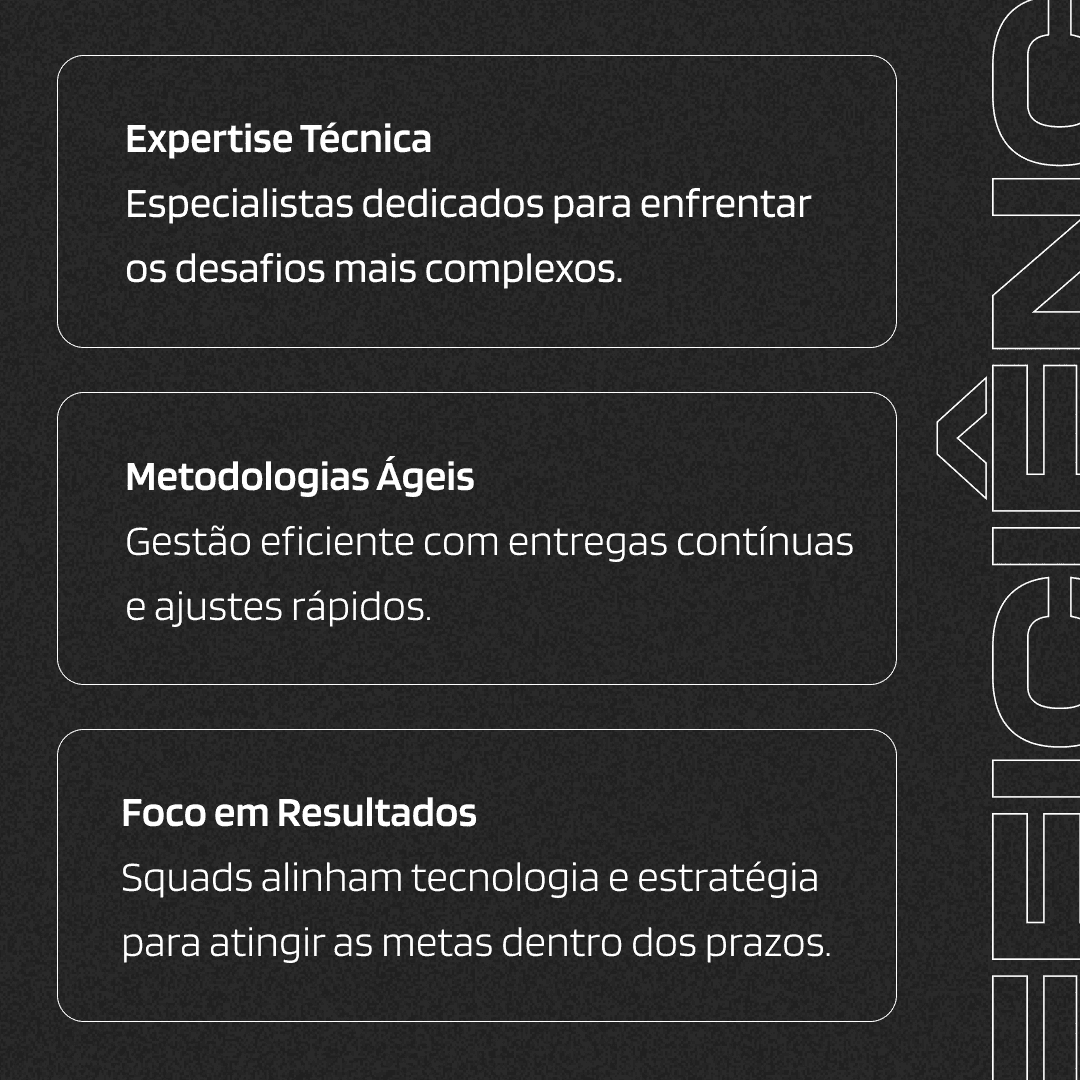
For high-complexity projects, generalist teams may not be enough. Specialized squads are made up of professionals with deep technical knowledge in specific areas, allowing problems to be solved with precision and efficiency.
These multidisciplinary teams are agile, collaborative, and focused on delivering high-impact solutions, regardless of the project's difficulty.
Agile Methodologies
IT projects rarely follow a linear path. Scope changes, new demands, and technological advances require an adaptable approach.
Agile methodologies, such as Scrum and Kanban, allow teams to manage uncertainty efficiently, delivering value continuously while adjusting course to meet customer needs. This flexibility is essential to keep the project aligned with business goals.
Aligning Technology with Business Strategy
Large projects are not limited to implementing tools or developing systems; they are a bridge to achieving strategic goals.
A consistent focus on results ensures that each stage of the project contributes directly to organizational success. Well-guided squads combine technical expertise with a deep understanding of the client's objectives, ensuring deadlines are met without sacrificing quality.
Adopting the Right Technology Tools
Another crucial aspect for success in IT projects is choosing and using the right technology tools. Project management tools, task automation, and continuous monitoring help squads stay organized, track progress, and quickly identify bottlenecks.
Solutions like Jira, Trello, and continuous integration tools are examples that allow greater transparency and collaboration among team members, ensuring the project moves forward without unnecessary detours.
Effective Communication
Communication is one of the most important pillars for the success of any IT project, especially in highly complex scenarios. Regular meetings, collaboration tools, and well-defined communication channels help align expectations between stakeholders and squads.
In addition, transparency in the exchange of information avoids misunderstandings and ensures that everyone involved is aware of the project's progress, challenges, and critical decisions. Clear and consistent communication reduces the risks of misalignment and increases the chances of success.
Continuous Feedback Throughout the Project Cycle
The practice of collecting constant feedback from all involved parties is also essential for effective communication. This includes both internal feedback, among team members, and external feedback, from stakeholders and end users.
Retrospective sessions, satisfaction surveys, and integration reviews help adjust the project's course quickly, ensuring that it is always aligned with real needs.
Overcoming Complexity in IT
The secret to facing complexity lies in the combination of talent, methodology, and strategic vision. Companies that invest in specialized squads, adopt agile practices, and stay focused on results not only overcome challenges but also create robust and sustainable solutions.
Complexity in IT projects is inevitable, but chaos does not have to be. With well-structured teams, efficient methodologies, and a clear view of the objectives, any challenge can be transformed into an opportunity for innovation and growth.
The Importance of Accurate Diagnostics at the Start of the Project
Many problems in IT projects arise from a lack of clarity at the beginning. A detailed diagnosis, including process mapping, requirements gathering, and identification of potential risks, is essential to establish a solid foundation.
This allows teams to understand the project's true scope and make informed decisions from the start, minimizing rework and delays.
Talk to us and discover how we can enhance your operation, overcoming challenges of complexity, agility, and strategic alignment, delivering innovative solutions efficiently.
LET'S TALK ABOUT YOUR PROJECT?
We help turn innovative ideas into reality, fix process flaws through digital solutions, and design interfaces that delight and engage. Committed to excellence and compliance with LGPD, we empower businesses to grow sustainably and securely.

ALL CASES
The Challenge of Complexity in IT Projects
•
5 min
IT projects, especially in large companies, often face a maze of challenges: tight deadlines, expanding scope, frequent changes, and pressure to deliver tangible results. Managing this complexity can seem daunting, but with the right approach, it is possible to turn these challenges into opportunities for innovation.
Some important points to ensure efficiency in complex projects include:
Specialized Squads
For high-complexity projects, generalist teams may not be enough. Specialized squads are made up of professionals with deep technical knowledge in specific areas, allowing problems to be solved with precision and efficiency.
These multidisciplinary teams are agile, collaborative, and focused on delivering high-impact solutions, regardless of the project's difficulty.
Agile Methodologies
IT projects rarely follow a linear path. Scope changes, new demands, and technological advances require an adaptable approach.
Agile methodologies, such as Scrum and Kanban, allow teams to manage uncertainty efficiently, delivering value continuously while adjusting course to meet customer needs. This flexibility is essential to keep the project aligned with business goals.
Aligning Technology with Business Strategy
Large projects are not limited to implementing tools or developing systems; they are a bridge to achieving strategic goals.
A consistent focus on results ensures that each stage of the project contributes directly to organizational success. Well-guided squads combine technical expertise with a deep understanding of the client's objectives, ensuring deadlines are met without sacrificing quality.
Adopting the Right Technology Tools
Another crucial aspect for success in IT projects is choosing and using the right technology tools. Project management tools, task automation, and continuous monitoring help squads stay organized, track progress, and quickly identify bottlenecks.
Solutions like Jira, Trello, and continuous integration tools are examples that allow greater transparency and collaboration among team members, ensuring the project moves forward without unnecessary detours.
Effective Communication
Communication is one of the most important pillars for the success of any IT project, especially in highly complex scenarios. Regular meetings, collaboration tools, and well-defined communication channels help align expectations between stakeholders and squads.
In addition, transparency in the exchange of information avoids misunderstandings and ensures that everyone involved is aware of the project's progress, challenges, and critical decisions. Clear and consistent communication reduces the risks of misalignment and increases the chances of success.
Continuous Feedback Throughout the Project Cycle
The practice of collecting constant feedback from all involved parties is also essential for effective communication. This includes both internal feedback, among team members, and external feedback, from stakeholders and end users.
Retrospective sessions, satisfaction surveys, and integration reviews help adjust the project's course quickly, ensuring that it is always aligned with real needs.
Overcoming Complexity in IT
The secret to facing complexity lies in the combination of talent, methodology, and strategic vision. Companies that invest in specialized squads, adopt agile practices, and stay focused on results not only overcome challenges but also create robust and sustainable solutions.
Complexity in IT projects is inevitable, but chaos does not have to be. With well-structured teams, efficient methodologies, and a clear view of the objectives, any challenge can be transformed into an opportunity for innovation and growth.
The Importance of Accurate Diagnostics at the Start of the Project
Many problems in IT projects arise from a lack of clarity at the beginning. A detailed diagnosis, including process mapping, requirements gathering, and identification of potential risks, is essential to establish a solid foundation.
This allows teams to understand the project's true scope and make informed decisions from the start, minimizing rework and delays.
Talk to us and discover how we can enhance your operation, overcoming challenges of complexity, agility, and strategic alignment, delivering innovative solutions efficiently.
LET'S TALK ABOUT YOUR PROJECT?
We help turn innovative ideas into reality, fix process flaws through digital solutions, and design interfaces that delight and engage. Committed to excellence and compliance with LGPD, we empower businesses to grow sustainably and securely.
ALL CASES
•
5 min
The Challenge of Complexity in IT Projects
IT projects, especially in large companies, often face a maze of challenges: tight deadlines, expanding scope, frequent changes, and pressure to deliver tangible results. Managing this complexity can seem daunting, but with the right approach, it is possible to turn these challenges into opportunities for innovation.
Some important points to ensure efficiency in complex projects include:
Specialized Squads
For high-complexity projects, generalist teams may not be enough. Specialized squads are made up of professionals with deep technical knowledge in specific areas, allowing problems to be solved with precision and efficiency.
These multidisciplinary teams are agile, collaborative, and focused on delivering high-impact solutions, regardless of the project's difficulty.
Agile Methodologies
IT projects rarely follow a linear path. Scope changes, new demands, and technological advances require an adaptable approach.
Agile methodologies, such as Scrum and Kanban, allow teams to manage uncertainty efficiently, delivering value continuously while adjusting course to meet customer needs. This flexibility is essential to keep the project aligned with business goals.
Aligning Technology with Business Strategy
Large projects are not limited to implementing tools or developing systems; they are a bridge to achieving strategic goals.
A consistent focus on results ensures that each stage of the project contributes directly to organizational success. Well-guided squads combine technical expertise with a deep understanding of the client's objectives, ensuring deadlines are met without sacrificing quality.
Adopting the Right Technology Tools
Another crucial aspect for success in IT projects is choosing and using the right technology tools. Project management tools, task automation, and continuous monitoring help squads stay organized, track progress, and quickly identify bottlenecks.
Solutions like Jira, Trello, and continuous integration tools are examples that allow greater transparency and collaboration among team members, ensuring the project moves forward without unnecessary detours.
Effective Communication
Communication is one of the most important pillars for the success of any IT project, especially in highly complex scenarios. Regular meetings, collaboration tools, and well-defined communication channels help align expectations between stakeholders and squads.
In addition, transparency in the exchange of information avoids misunderstandings and ensures that everyone involved is aware of the project's progress, challenges, and critical decisions. Clear and consistent communication reduces the risks of misalignment and increases the chances of success.
Continuous Feedback Throughout the Project Cycle
The practice of collecting constant feedback from all involved parties is also essential for effective communication. This includes both internal feedback, among team members, and external feedback, from stakeholders and end users.
Retrospective sessions, satisfaction surveys, and integration reviews help adjust the project's course quickly, ensuring that it is always aligned with real needs.
Overcoming Complexity in IT
The secret to facing complexity lies in the combination of talent, methodology, and strategic vision. Companies that invest in specialized squads, adopt agile practices, and stay focused on results not only overcome challenges but also create robust and sustainable solutions.
Complexity in IT projects is inevitable, but chaos does not have to be. With well-structured teams, efficient methodologies, and a clear view of the objectives, any challenge can be transformed into an opportunity for innovation and growth.
The Importance of Accurate Diagnostics at the Start of the Project
Many problems in IT projects arise from a lack of clarity at the beginning. A detailed diagnosis, including process mapping, requirements gathering, and identification of potential risks, is essential to establish a solid foundation.
This allows teams to understand the project's true scope and make informed decisions from the start, minimizing rework and delays.
Talk to us and discover how we can enhance your operation, overcoming challenges of complexity, agility, and strategic alignment, delivering innovative solutions efficiently.
LET'S TALK ABOUT YOUR PROJECT?
We help turn innovative ideas into reality, fix process flaws through digital solutions, and design interfaces that delight and engage. Committed to excellence and compliance with LGPD, we empower businesses to grow sustainably and securely.